Root Rot Recovery Guide: How to Save an Overwatered Plant with Black Roots
Published Date:
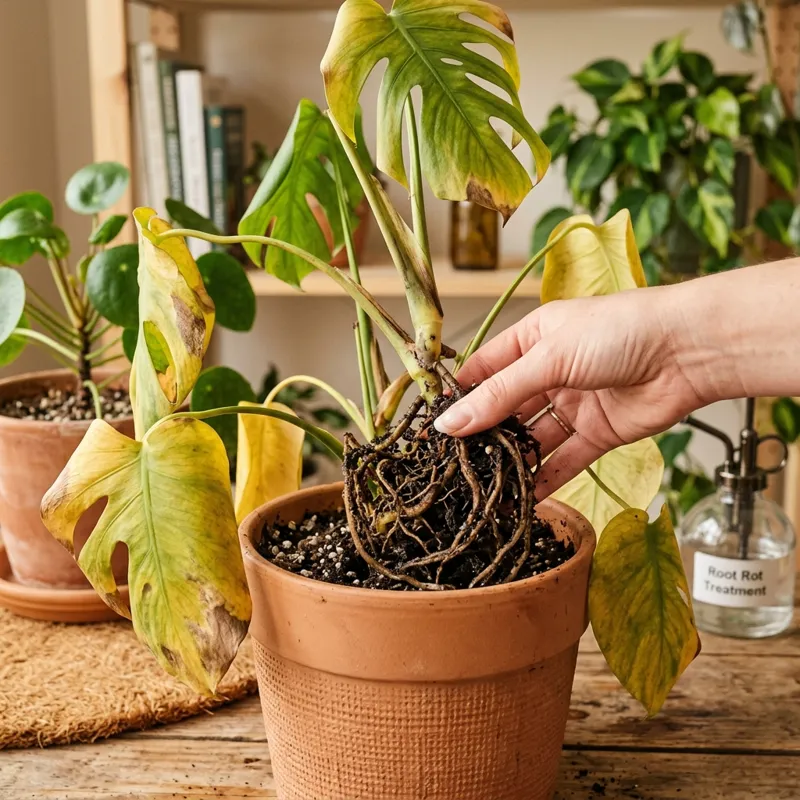
Root rot is one of the most common and devastating issues for indoor plants. Usually caused by overwatering or poor drainage, it suffocates the roots and leads to fungal growth. Once the roots begin to rot, they turn black and mushy, preventing the plant from absorbing nutrients and water.
If your plant’s leaves are turning yellow, wilting despite wet soil, or smelling like decay, root rot is likely the culprit. Fortunately, if caught early enough, you can save your green friends.
Here is the step-by-step root rot recovery guide recommended by our AI botany assistant Kök:
1. Carefully Remove the Plant from Its Pot
Gently tip the pot sideways and slide the plant out. Do not pull the plant by its stem, as weakened roots might snap. Once out, gently shake off the old soil so you can inspect the root system clearly.
2. Inspect and Prune the Roots
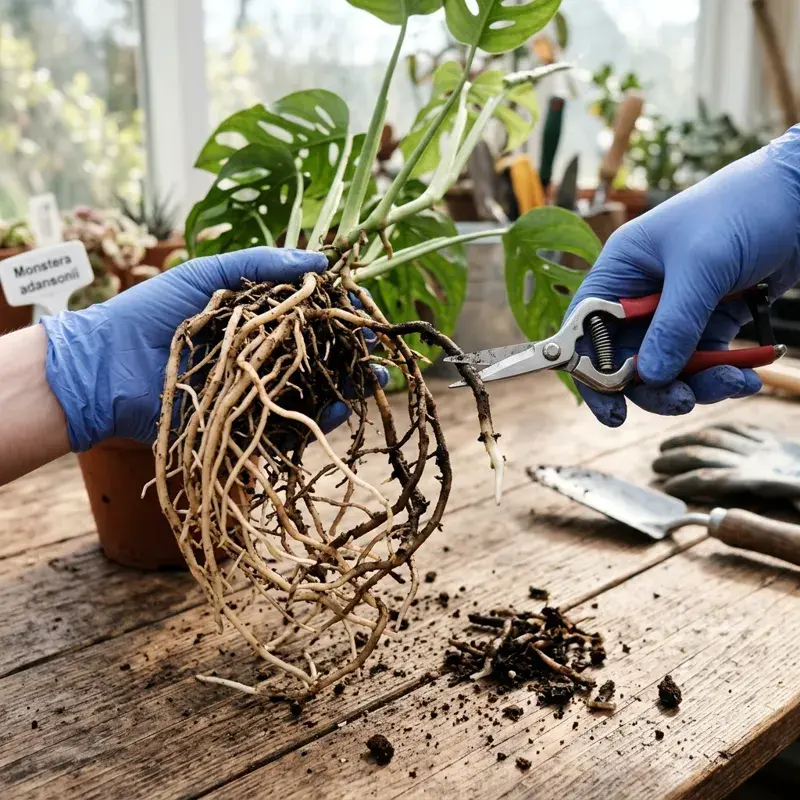
Healthy roots are firm and white or light tan. Rotted roots are black, brown, slimy, and mushy.
- Action: Using sharp, clean pruning shears (sterilized with rubbing alcohol), snip away all the rotted black roots. Make sure you only leave healthy, firm roots intact.
3. Sterilize the Remaining Root Ball
To ensure any lingering fungal spores are destroyed, gently rinse the remaining healthy roots under lukewarm running water. You can also dip them in a diluted hydrogen peroxide solution (1 part 3% hydrogen peroxide to 2 parts water) to clean them thoroughly.
4. Repot in Fresh Soil and a Clean Pot
Never reuse the old soil or the same unwashed pot, as they still carry the fungus that caused the rot.
- Action: Wash the old pot thoroughly with soap and bleach, or use a new pot with excellent drainage holes. Fill it with a fresh, airy potting mix (adding perlite or bark helps improve drainage).
5. Adjust Your Watering Routine
Give the plant a light watering and place it in a bright spot with indirect sunlight. Avoid fertilizing for at least 4-6 weeks while the roots recover. Most importantly, let the soil dry out significantly between waterings in the future.
Keep Your Plants Safe with Kök!
Not sure how to schedule your plant care or how much water your plant needs? Download the Kök app. Our advanced AI diagnostics and smart scheduling tool will tell you exactly when to water, fertilize, and repot based on your local climate and plant species. Download Kök App Now and keep your plants thriving!